Most English-Friendly Retirement Destinations
Where you can get by in English without learning the local language. EF EPI scores and practical reality in each country.
Most English-Friendly Retirement Destinations
Learning the local language is the single best thing you can do for a successful retirement abroad. But not everyone arrives fluent, and the first year abroad is hard enough without being unable to ask for a doctor or read a lease. Here is where you can get by in English while you learn, based on EF English Proficiency Index data and on-the-ground practical reality.
What the scores mean
The EF EPI ranks countries on English proficiency from "very high" to "very low." The scores are useful but incomplete: a high national score does not guarantee your local butcher speaks English, and a low national score does not mean you cannot find English-speaking professionals in the capital.
The practical question for a retiree is: can I handle daily life -- banking, healthcare, utilities, socializing -- in English while I learn the local language? Here is the honest answer, country by country.
Tier 1: English is genuinely widespread
### Malaysia (No EF EPI score, but English is a de facto second language)
Malaysia is the most English-friendly retirement destination in Asia by a wide margin. English was an official language during British rule and remains the language of business, law, and higher education. In Kuala Lumpur and Penang, you can do virtually everything in English: banking, medical appointments, government paperwork, real estate transactions. Many doctors were trained in the UK, US, or Australia. Street signs and official documents are often bilingual.
The caveat: this is urban Malaysia. In smaller towns, English proficiency drops sharply, and knowing some Malay (Bahasa Malaysia) becomes important.
Destination page: Malaysia
### Portugal (EF EPI: 612, Very High Proficiency)
Portugal scores among the best in Europe for English. In Lisbon, Porto, and the Algarve, you can handle most daily life in English. Young Portuguese professionals speak it fluently. The expat community is large enough that English-language services are widely available.
But there is a gap between major cities and rural areas. In a small Alentejo village, English will not get you far. And even in Lisbon, government bureaucracy is in Portuguese -- you will need help for immigration paperwork. Budget for a translator or a Portuguese-speaking friend for official processes.
Destination page: Portugal
### Greece (EF EPI: 592, High Proficiency)
Greece surprises many people. The EF EPI ranks it 20th globally in the "high" band. English is widely spoken in Athens, on the islands, and in areas with tourism. Greek people generally speak it without the hesitation you might encounter in, say, Italy or France. The tourism sector ensures generations of Greeks have strong English.
The practical limitation: government bureaucracy and healthcare administration are in Greek. You will need help for tax forms and residency paperwork. But daily social life, shopping, and getting around in English are entirely feasible.
Destination page: Greece
Tier 2: English works in hubs, but learn the basics
### Spain (EF EPI: 540, Moderate Proficiency)
Spain is the classic "English works until it does not" destination. In Valencia, Alicante, Malaga, and the Canary Islands, the expat density and tourism infrastructure mean English is common. You can find English-speaking doctors, real estate agents, and tax advisors. But step outside the expat bubble and English proficiency drops fast. Spain's national EF EPI score is moderate (540), and government bureaucracy is in Spanish with no English fallback.
Many retirees live happily in Spain for years with minimal Spanish, but they are dependent on the expat service ecosystem. That works, but it limits where you can live and who you can interact with.
Destination page: Spain
### Malta and Cyprus (Both high English proficiency)
Both are former British colonies where English is an official language alongside Maltese and Greek/Turkish respectively. You can live entirely in English. Malta scores especially well on English proficiency and has a dedicated retirement program. The trade-off is cost: both are more expensive than mainland alternatives and geographically small.
Destination pages: Malta, Cyprus
### Costa Rica (Medium English in hubs)
English works in the Central Valley expat towns (Atenas, Escazu) and beach communities (Tamarindo) because of tourism and a large US expat population. In San Jose, many doctors and professionals speak English. Outside these zones, Spanish is essential. Costa Rica scores lower on English proficiency than the European destinations above.
Destination page: Costa Rica
### Panama (Medium English in hubs)
Panama City and Boquete have enough English-speaking professionals and expats to function. The US dollar as the national currency removes one layer of friction. But Spanish is the language of daily life outside the expat bubble, and English proficiency nationally is moderate at best.
Destination page: Panama
Tier 3: English is a bonus, not a default
### France (EF EPI: 539, Moderate Proficiency)
France's English proficiency is moderate but uneven. In Paris and on the Riviera, English works in restaurants and basic transactions. In rural France -- the Dordogne, Provence, Brittany -- English is far less common. And France has a cultural expectation that you will at least try to speak French. The visa process and government bureaucracy are entirely in French. You can get by in English in expat-heavy areas, but France rewards effort in the language more than most countries on this list.
Destination page: France
### Italy (EF EPI: 513, Moderate Proficiency)
Italy's English proficiency is below the European average. In tourist cities (Rome, Florence, Venice), English is common in restaurants and hotels. Outside the tourist circuit, it drops off considerably. Government interactions are in Italian. The 7% flat-tax scheme for southern towns (populations under 30,000) puts many retirees in places where English is genuinely rare. Budget for language lessons as part of your transition.
Destination page: Italy
### Colombia (EF EPI: 480, Low Proficiency)
Colombia is a fast-growing retirement destination where English is not widely spoken. Medellin's expat bubble provides some English-language services, but day-to-day life -- shopping, transport, utilities, banking -- requires Spanish. Colombia scores "low" on the EF EPI. This is one of the least English-friendly destinations on the list, and it rewards retirees who commit to learning the language.
Destination page: Colombia
### Ecuador (Low English Proficiency)
Ecuador's expat hubs (Cuenca, Cotacachi, Vilcabamba) have English-speaking services, but they are limited. Outside these zones, Spanish is essential. Ecuador does not publish an EF EPI score, but practical experience says English proficiency is low. Cuenca has enough English-speaking professionals that you can manage, but this is not a destination where you coast on English.
Destination page: Ecuador
### Thailand (Medium in tourist zones, low elsewhere)
Thailand has a large, well-established expat-retiree community, and English is common in private hospitals, tourist areas, and expat businesses. But daily life -- markets, transport, government offices -- runs in Thai. The language barrier is higher than most retirees expect. English proficiency is not rated highly on the EF EPI, but the expat infrastructure compensates in Bangkok, Chiang Mai, and Hua Hin.
Destination page: Thailand
The bottom line
You can retire comfortably in English in maybe ten countries: Malaysia, Portugal, Malta, Cyprus, and -- with some dependency on the expat bubble -- Spain, Greece, Costa Rica, Panama, and parts of Thailand and France. Everywhere else on the RetireSpots directory will require a working knowledge of the local language within your first year.
The best approach: budget for language lessons as part of your move. Even in the most English-friendly country, learning the local language opens doors that stay permanently closed to English-only retirees. But knowing where you can land softly while you learn is valuable planning.
Related guides:
Explore the top-rated destinations
 #1
#1
Portugal
Europe
Portugal
86/100 #2
#2
Chile
Latin America
Chile
84/100 #3
#3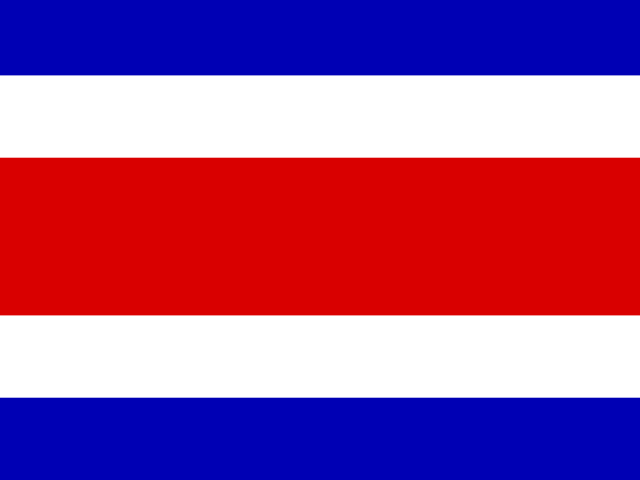
Costa Rica
Latin America