Malta
A solid all-round choice. Ranked 19 of 55, strongest on expat community, softest on retiree visa.
- Healthcare 78
- Retiree visa 50
- Affordability 78
- Safety 76
- Climate 88
- Expat community 90
- Retirement visaYesMalta Retirement Programme (MRP)csbgroup.com
- Min incomeHigh (harder to meet)csbgroup.com
- Monthly budget~$1,300-1,800/monumbeo.com
- HealthcareGooden.wikipedia.org
- SafetySafenumbeo.com
- Top citiesSliema, Valletta, Gozo
Good to know
- Good healthcare accessMalta has a publicly funded system that is free at the point of delivery, modelled on the British system with GP-led primary care and public hospitals (notably Mater Dei, one of Europe's largest medical buildings) for secondary and tertiary care. In 2000 the WHO ranked Malta's health system 5th in the world; more recent assessments place it lower but still solid.en.wikipedia.org
- Dedicated retirement visaMalta Retirement Programme (MRP)csbgroup.com
- Low cost of livingNumbeo shows US cost of living including rent about 26.5 percent higher than Malta; a single retiree can generally budget in the range of roughly 1,300 to 1,800 US dollars per month.numbeo.com
- Safe for retireesMalta carries a Numbeo Safety Index of about 57 (2026), indicating a generally safe environment with low violent crime; petty theft in tourist zones is the main concern.numbeo.com
- Comfortable climateMalta has a Mediterranean climate with mild, rainy winters and hot, dry summers, giving long sunny seasons that appeal to retirees, though heat waves are intensifying.en.wikipedia.org
- Established expat communityEnglish is an official language of Malta, so retirees can manage everyday life, healthcare and administration in English, and there is an established international and retiree community drawn by dedicated residence and retirement programmes.en.wikipedia.org
Watch out for
No cautions from the verified data.
Visa & residency
No fixed monthly income figure, but the programme carries a minimum annual tax of 7,500 euro per beneficiary plus 500 euro per dependant, plus a qualifying property (purchase from 275,000 euro in Malta / 220,000 euro in Gozo or South Malta, or rent from 9,600 euro/year in Malta / 8,750 euro/year in Gozo or South Malta), which effectively places the practical income need in the high band.
The Malta Retirement Programme is a Maltese national special tax status for pensioners (open to EU and non-EU nationals), not EU freedom of movement. A pension must form at least 75 percent of chargeable income and be remitted to Malta, a qualifying property must be held (purchase or rent minimums), and Malta- and EU-compliant health insurance is mandatory.
Healthcare
Malta has a publicly funded system that is free at the point of delivery, modelled on the British system with GP-led primary care and public hospitals (notably Mater Dei, one of Europe's largest medical buildings) for secondary and tertiary care. In 2000 the WHO ranked Malta's health system 5th in the world; more recent assessments place it lower but still solid.
The Ministry of Health recommends that foreign residents obtain private medical insurance, and Malta- and EU-compliant health cover is a mandatory condition of the Malta Retirement Programme.
Cost of living
Numbeo shows US cost of living including rent about 26.5 percent higher than Malta; a single retiree can generally budget in the range of roughly 1,300 to 1,800 US dollars per month.
Numbeo reports US rent prices about 36.1 percent higher than in Malta, so housing is noticeably cheaper than in the US, though rents in prime Sliema/St Julian's areas are higher than the island average.
Safety
Malta carries a Numbeo Safety Index of about 57 (2026), indicating a generally safe environment with low violent crime; petty theft in tourist zones is the main concern.
Climate
Malta has a Mediterranean climate with mild, rainy winters and hot, dry summers, giving long sunny seasons that appeal to retirees, though heat waves are intensifying.
Community & language
English is an official language of Malta, so retirees can manage everyday life, healthcare and administration in English, and there is an established international and retiree community drawn by dedicated residence and retirement programmes.
Two official languages: Maltese (the national language) and English, so day-to-day life and administration are widely accessible in English.
Taxes
MRP beneficiaries pay a flat 15 percent rate on foreign pension income remitted to Malta, subject to a minimum annual tax of 7,500 euro per beneficiary plus 500 euro per dependant; income arising in Malta is taxed at standard rates.
Under the Malta Retirement Programme, foreign pension income remitted to Malta is taxed at a flat 15 percent, and Malta's network of double taxation treaties (including with the US and UK) can allow relief against double taxation on that income.
Moving & migration
Foreign retirees can open a bank account in Malta with a valid passport, proof of address in Malta (rental agreement or utility bill), and a reference letter from their home bank. EU citizens have the right to open a basic bank account. Non-EU nationals need a valid residence permit or visa. Expat-friendly banks: Bank of Valletta (BOV), HSBC Malta, APS Bank, and BNF Bank. Most banks require physical presence for account opening. Some banks offer international/private banking with remote setup options for high-net-worth individuals. Maltese banks are conservative and may require source-of-funds documentation for large deposits.
EU citizens can access Malta's public healthcare system with a European Health Insurance Card (EHIC) for temporary stays. For permanent residents, registration with the Entitlement Unit (Ministry for Health) is required using Form E121/S1 (for pensioners) or by paying social security contributions. Non-EU residents with a residence permit must have comprehensive private health insurance, as they generally do not qualify for free public healthcare unless employed and paying social security. The Malta Retirement Programme requires private health insurance covering all risks in Malta. Private hospitals: St. James Hospital, Da Vinci Health. Public healthcare is provided through Mater Dei Hospital and regional health centers. Registration requires: residence permit, proof of address, identification documents.
EU/EEA driving licenses are valid in Malta until expiry. License holders from recognized countries (UK, Australia, Switzerland, Japan, UAE, etc.) can drive for 12 months from arrival, then must exchange for a Maltese license (no test required) within that period. Non-recognized country licenses are valid for 12 months, after which the holder must pass a Maltese driving test (theory + practical). Minimum age: 18 for cars/motorcycles. License exchange is processed by Transport Malta. Medical certificate required for drivers over 70. Malta drives on the left.
EU citizens moving to Malta can import household goods and personal effects duty-free as transfer of normal residence. Non-EU nationals with a residence permit: duty-free import of used household goods within 12 months of obtaining residence, provided goods have been owned and used for at least 6 months. Required documents: detailed inventory list (in English, valued), passport, residence permit, certificate of change of residence, bill of lading, customs declaration (Form C100). Prohibited/restricted items: firearms (require police permit), food products, plants (require phytosanitary certificate from Malta Plant Health Directorate), more than 200 cigarettes or equivalent tobacco. One vehicle can be imported duty-free under transfer of residence if owned 6+ months. Typical shipping costs from Europe: EUR 1500-3500 for a partial container. Malta is an island; all goods arrive by sea.
Dogs and cats entering Malta require: ISO 11784/11785 microchip, valid rabies vaccination (administered at least 21 days before travel), and an EU pet passport (for EU pets) or official third-country veterinary certificate. Malta requires Echinococcus multilocularis treatment (praziquantel) for dogs 24-120 hours before entry. No quarantine for compliant pets. Up to 5 pets per person. Restricted breeds: pit bull terrier, Japanese tosa, dogo argentino, fila brasileiro are banned and cannot be imported. All pets must enter through Malta International Airport as an approved entry point. Non-compliant pets may be quarantined or returned at owner's expense.
Malta retirement residency timeline: (1) Before arrival: Non-EU nationals need a National D-visa. Apply at Maltese embassy with: passport, proof of accommodation, health insurance, proof of sufficient resources. (2) Arrival in Malta. (3) Apply for residence permit within days of arrival: submit online via Expatriates Portal (expatriates.identita.gov.mt); under 'Economic Self-Sufficient' category. Fee: EUR 100. Requirements: valid health insurance, proof of income (pension/annuity), rental/purchase agreement. Passport must have 8+ months validity. (4) Processing: 2-4 months for residence card. Temporary residence permit valid 1 year, renewable. (5) Alternatively, use Malta Retirement Programme (MRP): 15% flat tax on foreign pension income remitted to Malta. Minimum tax: EUR 7,500/year. Must own/rent property. Apply via CFR (cfr.gov.mt). (6) After 5 years of continuous legal residence: eligible to apply for long-term residence (EUR 500 fee). Permanent status. (7) After 5 years with long-term status (10+ years total): eligible for citizenship by naturalization (discretionary, requires Maltese/English language). Fast-track: citizenship by investment (MEIN) from EUR 600,000, processing 12-36 months.
Popular retirement spots
Where retirees in Malta tend to settle, and the honest reason why. Each note shows its source.
Sliema
Coastal resort town on Malta's northeast with a seafront promenade and a large foreign-resident population.
Valletta
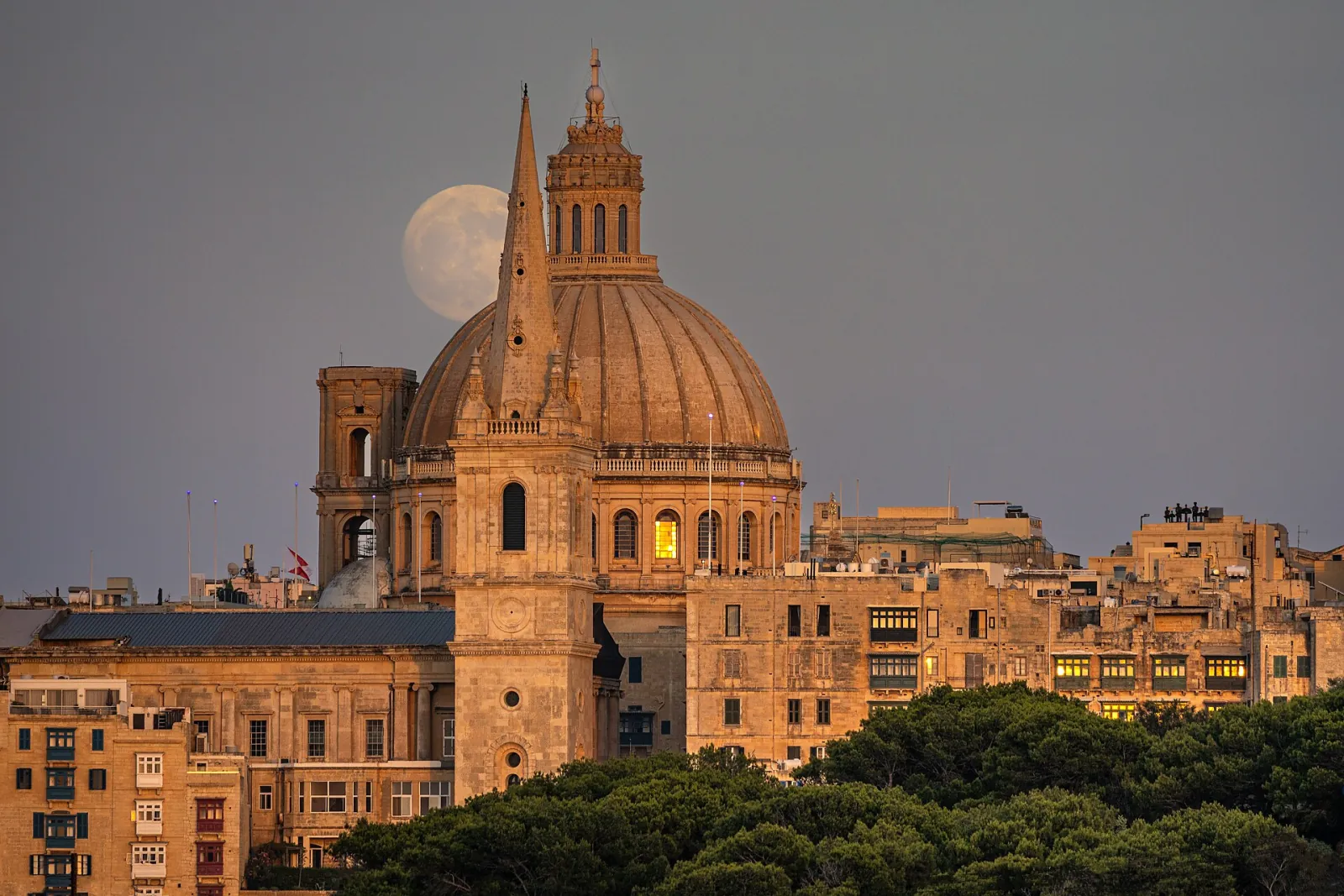
Malta's small coastal capital, a walled UNESCO World Heritage city with hot dry summers and mild winters.
Gozo
Malta's quieter, more rural second island with a Mediterranean climate and a slower pace than the main island.
St. Julian's
Coastal tourism and nightlife town north of Valletta where foreign nationals make up a majority of residents.
Questions about retiring in Malta
Answered from the verified data on this page. Every answer shows its source; anything we have not confirmed says so plainly rather than guessing.
- Does Malta have a retirement visa?
Yes. Malta offers the Malta Retirement Programme (MRP).
csbgroup.com- Do EU citizens need a visa to retire in Malta?
No. Under EU freedom of movement, EU citizens may live and retire in Malta. You can stay up to three months without registering, then register with the local authorities for longer stays.
europa.eu- How much monthly income do I need to retire in Malta?
As a guide: No fixed monthly income figure, but the programme carries a minimum annual tax of 7,500 euro per beneficiary plus 500 euro per dependant, plus a qualifying property (purchase from 275,000 euro in Malta / 220,000 euro in Gozo or South Malta, or rent from 9,600 euro/year in Malta / 8,750 euro/year in Gozo or South Malta), which effectively places the practical income need in the high band. Treat this as indicative and verify the current official figure before you rely on it.
csbgroup.com- Is healthcare good for expats in Malta?
Healthcare quality is rated good. Malta has a publicly funded system that is free at the point of delivery, modelled on the British system with GP-led primary care and public hospitals (notably Mater Dei, one of Europe's largest medical buildings) for secondary and tertiary care. In 2000 the WHO ranked Malta's health system 5th in the world; more recent assessments place it lower but still solid. On cost: The Ministry of Health recommends that foreign residents obtain private medical insurance, and Malta- and EU-compliant health cover is a mandatory condition of the Malta Retirement Programme.
en.wikipedia.org- How expensive is it to retire in Malta?
Lower than the US. A comfortable single-retiree budget is Numbeo shows US cost of living including rent about 26.5 percent higher than Malta; a single retiree can generally budget in the range of roughly 1,300 to 1,800 US dollars per month.
numbeo.com- Is Malta safe?
Safe. Malta carries a Numbeo Safety Index of about 57 (2026), indicating a generally safe environment with low violent crime; petty theft in tourist zones is the main concern.
numbeo.com- What is the climate like in Malta?
The climate is Mediterranean. Malta has a Mediterranean climate with mild, rainy winters and hot, dry summers, giving long sunny seasons that appeal to retirees, though heat waves are intensifying.
en.wikipedia.org- Where do retirees live in Malta?
Popular retirement spots include Sliema, Valletta, Gozo and St. Julian's.
en.wikipedia.org
Compare Malta with its closest rivals
The three countries whose RetireScore sits nearest.