Slovenia
A solid all-round choice. Ranked 30 of 55, strongest on safety, softest on retiree visa.
- Healthcare 78
- Retiree visa 22
- Affordability 78
- Safety 95
- Climate 88
- Expat community not verified70
1 of 6 axes rest on data we could not verify yet; those score a neutral 50 and are marked "not verified".
- Retirement visaNolegaltomove.com
- Min incomeLow (easier to meet)consiliojus.com
- Monthly budget~$1,600-1,700/momyglobal.si
- HealthcareGooden.wikipedia.org
- SafetyVery safeen.wikipedia.org
- Top citiesLjubljana, Piran, Bled
Good to know
- Good healthcare accessUniversal public system run by the Health Insurance Institute of Slovenia (HIIS/ZZZS) and funded by mandatory contributions; citizens and registered residents have a right to equal access, though waiting times for specialists and dental care can be long.en.wikipedia.org
- Low cost of livingA single person's all-in living cost is commonly estimated around 1,600-1,700 EUR/month including rent, cheaper than most of Western Europe and the US.myglobal.si
- Safe for retireesRanked 4th on the 2026 Global Peace Index (score 1.369), one of the most peaceful countries in the world and firmly in the 'high' state of peace.en.wikipedia.org
- Comfortable climateMixed climate: the western coast is transitional Mediterranean with mild winters, the interior is moderately continental with warm summers and cold winters, and the mountains are Alpine with heavy snow.climatestotravel.com
Watch out for
- No dedicated retirement visalegaltomove.com
- Expat community data not verified yet
Visa & residency
No dedicated retirement or passive-income visa; non-EU retirees use a temporary residence permit as a person of independent means (via a long-stay D visa), renewable annually and leading to permanent residence after five years. EU/EEA citizens have free movement.
Applicants must show sufficient means of subsistence (broadly tied to Slovenia's basic monthly income, in the region of ~900 EUR/month) plus health insurance and proof of accommodation; a modest bar by Western-European standards.
A foreigner seeking temporary residence needs a travel document valid at least three months beyond the stay, adequate health insurance covering emergency care, sufficient means of subsistence, and proof of the purpose of stay; the permit is renewed annually.
Healthcare
Universal public system run by the Health Insurance Institute of Slovenia (HIIS/ZZZS) and funded by mandatory contributions; citizens and registered residents have a right to equal access, though waiting times for specialists and dental care can be long.
Most residents historically added inexpensive supplementary insurance (about 30 EUR/month) to cover co-payments on top of the mandatory scheme.
Cost of living
A single person's all-in living cost is commonly estimated around 1,600-1,700 EUR/month including rent, cheaper than most of Western Europe and the US.
A one-bedroom apartment in central Ljubljana averages roughly 1,100 EUR/month, with cheaper options in suburbs and smaller cities like Maribor or Celje.
Safety
Ranked 4th on the 2026 Global Peace Index (score 1.369), one of the most peaceful countries in the world and firmly in the 'high' state of peace.
Climate
Mixed climate: the western coast is transitional Mediterranean with mild winters, the interior is moderately continental with warm summers and cold winters, and the mountains are Alpine with heavy snow.
Community & language
No verified data yet
Slovenia consistently scores in the 'very high' proficiency band of the EF English Proficiency Index, so English is widely spoken, especially among younger people and in Ljubljana.
Slovene is the official language, with Italian and Hungarian recognised as co-official in certain bilingual municipalities; Slovenia is an EU member.
Taxes
A Slovenian tax resident pays personal income tax on worldwide income, including foreign pensions; non-residents are taxed only on Slovenian-source income.
Foreign tax paid on non-Slovenian-source income may be credited against Slovenian tax under domestic rules or an applicable double-tax treaty; Slovenia maintains a broad treaty network covering partners such as the US, UK, Netherlands, Canada and Australia.
Moving & migration
As an EU/Schengen country, opening a bank account in Slovenia is straightforward. Major banks include NLB, Nova KBM, and SKB. You typically need a passport, Slovenian tax number (davcna stevilka), residence permit or registration certificate, and proof of address. Many banks offer English-language online banking. Non-residents may face additional requirements.
Slovenia has universal public healthcare via the Health Insurance Institute of Slovenia (HIIS/ZZZS), funded by mandatory contributions. Residents must register with ZZZS and obtain a Slovenian health insurance card. Mandatory insurance covers most basic care with co-payments; supplementary insurance (historically around 30 EUR/month) is recommended to cover co-payments. Foreign nationals with a residence permit must hold both a health insurance card and a biometric residence permit. Read the full guide at gov.uk/guidance/healthcare-in-slovenia.
You can drive in Slovenia on a foreign driving licence for up to 12 months from the start of residency. After that, you must exchange it for a Slovenian licence without taking a test. Apply at your local administrative unit (Upravna Enota). You must prove you were resident in the country that issued the licence when it was issued. For UK licences, use the British Embassy's letter confirming UK licences are only issued to UK residents.
As an EU member state, Slovenia applies EU customs rules. Personal property and used household goods may be imported duty-free when transferring your normal residence to Slovenia, provided the goods have been owned and used for at least 6 months. You must declare the goods to customs with an inventory. Contact the Slovenian Financial Administration (FURS) for current forms and procedures.
Dogs, cats, and ferrets entering Slovenia from another EU country need a microchip (or legible tattoo applied before 3 July 2011), an EU pet passport, and a valid rabies vaccination. From non-EU countries: a veterinary health certificate, declaration of non-commercial movement, microchip, and valid rabies vaccination are required. From unlisted (high-rabies) countries, a rabies antibody titre test is also required. Read full details at gov.si/en/policies/agriculture-forestry-and-food/travelling-with-pets.
1. Non-EU retirees apply for a temporary residence permit at a Slovenian embassy/consulate or at a local administrative unit (Upravna Enota) if already in Slovenia. Show proof of sufficient means of subsistence (~900 EUR/month), health insurance covering emergency care in Slovenia, proof of accommodation, and a valid travel document. 2. The temporary residence permit is typically valid for 1 year and is renewable annually. 3. Register your residence at the administrative unit within 8 days. 4. After 5 years of continuous legal residence, you may apply for a permanent residence permit. 5. The permanent residence application requires valid health insurance, sufficient funds, a clean criminal record from your home country, and proof of Slovene language proficiency at A2 level (exceptions for over-60s). Note: time on a study permit counts only at 50%.
Popular retirement spots
Where retirees in Slovenia tend to settle, and the honest reason why. Each note shows its source.
Ljubljana
The green, walkable capital between the Alps and the Karst, with an intact historic centre, extensive parks and pedestrian riverside; UNESCO-recognised for its human-centred urban design and high quality of life.
Piran
A picturesque Adriatic resort town on the Gulf of Piran with preserved Venetian-Gothic medieval streets and a mild Mediterranean setting around Tartini Square.
Bled
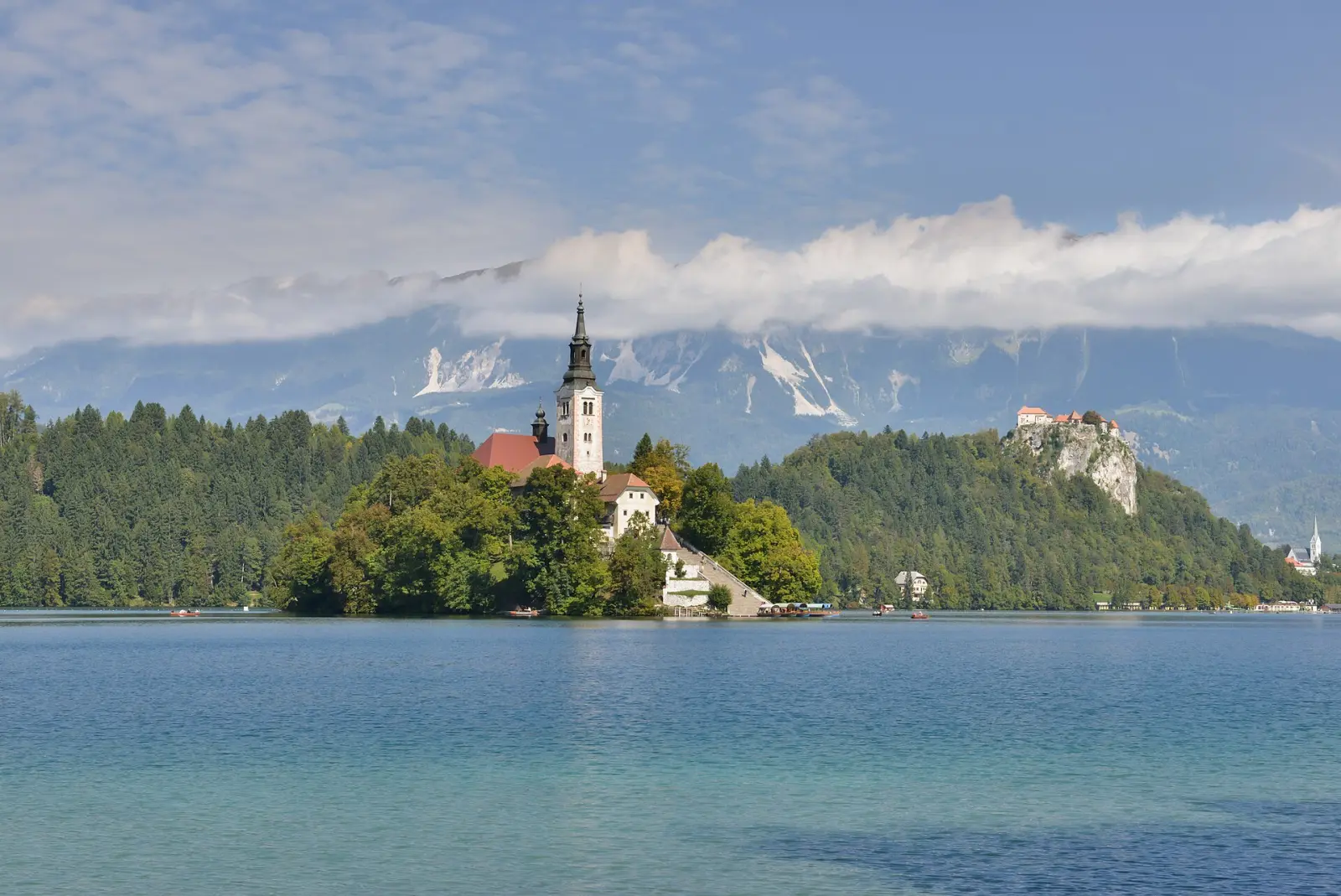
An alpine lake resort town with a glacial lake, island pilgrimage church and cliff-top castle, developed as a health resort in the 19th century and set beside Triglav National Park.
Questions about retiring in Slovenia
Answered from the verified data on this page. Every answer shows its source; anything we have not confirmed says so plainly rather than guessing.
- Does Slovenia have a retirement visa?
No dedicated retirement visa. Retirement is handled through a general residence route: No dedicated retirement or passive-income visa; non-EU retirees use a temporary residence permit as a person of independent means (via a long-stay D visa), renewable annually and leading to permanent residence after five years. EU/EEA citizens have free movement..
gov.si- How much monthly income do I need to retire in Slovenia?
As a guide: Applicants must show sufficient means of subsistence (broadly tied to Slovenia's basic monthly income, in the region of ~900 EUR/month) plus health insurance and proof of accommodation; a modest bar by Western-European standards. Treat this as indicative and verify the current official figure before you rely on it.
consiliojus.com- Is healthcare good for expats in Slovenia?
Healthcare quality is rated good. Universal public system run by the Health Insurance Institute of Slovenia (HIIS/ZZZS) and funded by mandatory contributions; citizens and registered residents have a right to equal access, though waiting times for specialists and dental care can be long. On cost: Most residents historically added inexpensive supplementary insurance (about 30 EUR/month) to cover co-payments on top of the mandatory scheme.
en.wikipedia.org- How expensive is it to retire in Slovenia?
Lower than the US. A comfortable single-retiree budget is A single person's all-in living cost is commonly estimated around 1,600-1,700 EUR/month including rent, cheaper than most of Western Europe and the US.
myglobal.si- Is Slovenia safe?
Very safe. Ranked 4th on the 2026 Global Peace Index (score 1.369), one of the most peaceful countries in the world and firmly in the 'high' state of peace.
en.wikipedia.org- What is the climate like in Slovenia?
The climate is Continental with Mediterranean and Alpine zones. Mixed climate: the western coast is transitional Mediterranean with mild winters, the interior is moderately continental with warm summers and cold winters, and the mountains are Alpine with heavy snow.
climatestotravel.com- Where do retirees live in Slovenia?
Popular retirement spots include Ljubljana, Piran and Bled.
en.wikipedia.org
Compare Slovenia with its closest rivals
The three countries whose RetireScore sits nearest.