Croatia
A solid all-round choice. Ranked 28 of 55, strongest on safety, softest on retiree visa.
- Healthcare 78
- Retiree visa 22
- Affordability 78
- Safety 95
- Climate 88
- Expat community 78
- Retirement visaNomup.gov.hr
- Min incomeLow (easier to meet)mup.gov.hr
- Monthly budgetLower than the USnumbeo.com
- HealthcareGoodhzzo.hr
- SafetyVery safecountryeconomy.com
- Top citiesSplit, Dubrovnik, Zadar
Good to know
- Good healthcare accessCroatia has a universal, compulsory public health insurance system administered by the Croatian Health Insurance Fund (HZZO/CHIF): 'Health insurance in the Republic of Croatia is compulsory.' It covers primary and specialist care, hospitalisation, medications and cross-border care through a central directorate and 20 regional branches, with modest patient co-payments.hzzo.hr
- Low cost of livingNumbeo reports cost of living in the United States is 35.4% higher than in Croatia excluding rent, and 55.0% higher including rent, so Croatia sits clearly below US levels but is not among the cheapest destinations.numbeo.com
- Safe for retireesCroatia ranked 15th of the countries measured in the 2024 Global Peace Index with a score of 1.504, placing it among the most peaceful countries in the world and well ahead of the US and UK.countryeconomy.com
- Comfortable climateThe Adriatic coast and islands have a mediterranean climate (mostly Koppen Csb) with hot, dry summers and mild, wet winters, while the interior has a warmer continental climate; mean monthly temperatures range from about -3 C to 18 C in January, with more extreme swings inland.en.wikipedia.org
- Established expat communityCroatia scores 617 on the EF English Proficiency Index and ranks 2nd worldwide, in the highest 'Very High Proficiency' band (global average 488), so English speakers get by easily; expat and retiree communities cluster along the Dalmatian coast (Split, Dubrovnik) and in Zagreb, though numbers are smaller than in Portugal or Spain.ef.com
Watch out for
- No dedicated retirement visamup.gov.hr
Visa & residency
Temporary stay (temporary residence permit) for third-country nationals, granted for a purpose such as 'other purposes'; there is no dedicated retirement category
The Ministry of the Interior lists the general conditions (funds to support oneself and health insurance) but publishes no fixed minimum monthly income for the ordinary 'other purposes' temporary stay, so the required means are modest relative to dedicated retirement visas elsewhere. Note the separate digital nomad permit is set at 2.5 times the average Croatian net salary (roughly EUR 3,600 per month in 2026) and does NOT allow pension-only retirees.
Croatia has no dedicated retirement visa. Temporary stay for third-country nationals is granted only for defined purposes (family reunification, study, research, humanitarian grounds, life partnership, work, long-term residence in another EEA state, digital nomad, or 'other purposes'), each requiring proof of the stay's purpose, a valid travel document, funds to support oneself, and health insurance. A US or UK retiree without a work or family basis must qualify under 'other purposes' at consular/Ministry discretion, which makes the path harder than in countries offering a passive-income retirement visa. Temporary stay is granted for up to one year at a time and is renewable.
Healthcare
Croatia has a universal, compulsory public health insurance system administered by the Croatian Health Insurance Fund (HZZO/CHIF): 'Health insurance in the Republic of Croatia is compulsory.' It covers primary and specialist care, hospitalisation, medications and cross-border care through a central directorate and 20 regional branches, with modest patient co-payments.
Coverage requirements extend to aliens with approved permanent or long-term residence and non-EU nationals employed or in business in Croatia, so most non-EU residents must register with and contribute to HZZO; many also buy supplementary (dopunsko) or private insurance to cover co-payments and access private clinics. Proof of health insurance is a condition of any temporary stay.
Cost of living
Numbeo reports cost of living in the United States is 35.4% higher than in Croatia excluding rent, and 55.0% higher including rent, so Croatia sits clearly below US levels but is not among the cheapest destinations.
Rent prices in the United States are about 129.7% higher than in Croatia (i.e. Croatian rents are roughly half of US levels), with groceries around 53% cheaper in Croatia; coastal tourist cities like Dubrovnik and Split are more expensive than the interior.
Safety
Croatia ranked 15th of the countries measured in the 2024 Global Peace Index with a score of 1.504, placing it among the most peaceful countries in the world and well ahead of the US and UK.
Climate
The Adriatic coast and islands have a mediterranean climate (mostly Koppen Csb) with hot, dry summers and mild, wet winters, while the interior has a warmer continental climate; mean monthly temperatures range from about -3 C to 18 C in January, with more extreme swings inland.
Community & language
Croatia scores 617 on the EF English Proficiency Index and ranks 2nd worldwide, in the highest 'Very High Proficiency' band (global average 488), so English speakers get by easily; expat and retiree communities cluster along the Dalmatian coast (Split, Dubrovnik) and in Zagreb, though numbers are smaller than in Portugal or Spain.
Official language is Croatian (a Slavic language written in the Latin alphabet); English is very widely spoken.
Taxes
Croatia levies a two-tier progressive personal income tax, roughly 15%-23% on annual income up to EUR 60,000 and 25%-33% above that, with exact rates set by each municipality; there is no special flat-tax pensioner regime like Greece's. Retirees who become Croatian tax residents should take individual advice on how their foreign pension is treated.
The first-ever US-Croatia income tax treaty was signed on 7 December 2022 but has not yet entered into force (a protocol amending it was signed in 2026), so US retirees currently rely on domestic double-tax relief; US citizens remain taxed by the US on worldwide income regardless. Croatia maintains a wide network of double taxation treaties with other countries.
Euro (EUR), adopted 1 January 2023 when Croatia became the 20th eurozone member, replacing the kuna
Moving & migration
Third-country nationals with temporary or permanent residence in Croatia can open a bank account. Requirements typically include: valid passport, residence permit (boravina iskaznica/biometric residence card), OIB (personal identification number, obtained from the tax authority - Porezna uprava upon residence registration), and proof of address. Major banks include: Zagrebacka banka, Privredna banka Zagreb (PBZ), Erste Bank, OTP Banka, and Raiffeisenbank. Physical presence is generally required, though some banks (Revolut, Wise) offer borderless accounts that can be opened remotely if you have an EU address. Non-residents can also open non-resident accounts with passport only, but these have limited features.
Third-country nationals with temporary residence in Croatia must have health insurance as a condition of residence (dokaz o zdravstvenom osiguranju). Once you hold a valid residence permit and are employed or paying contributions, you register with the Croatian Health Insurance Fund (HZZO - Hrvatski zavod za zdravstveno osiguranje). Registration requires: valid residence permit, OIB, proof of address, and employment contract or proof of contribution payment. For non-working residents (e.g. retirees with own funds), you must have private/travel health insurance or pay voluntary contributions to HZZO. There is no specific waiting period for those with mandatory insurance (through employment). For voluntary insurance, coverage begins upon registration and first payment. EU/EEE citizens can use the S1 form for healthcare transfer. Private health insurance is also widely used as supplementary coverage (e.g. Croatia osiguranje, Allianz).
Foreigners with temporary or permanent residence in Croatia (at least 185 days in a calendar year) can apply for a Croatian driving license. Non-EU/EEE driving licenses must be exchanged within 12 months of obtaining residence. The process: submit application at the police administration (policijska uprava) according to your place of residence. Required documents: valid foreign driving license (with certified translation into Croatian), valid passport or ID card, residence permit/proof of residence, proof of passing a medical examination (for categories C, D, and professional drivers), proof of passing the Croatian driving theory test (may be required depending on reciprocity agreements), and payment of administrative fees. Some countries have license reciprocity agreements where only a medical exam and administrative process are needed. Age requirements: 18 years for B category. The license is issued within 30 days (standard) or 3 days (expedited).
When moving to Croatia from outside the EU, used household goods and personal effects can be imported duty-free for persons transferring their normal residence. Conditions: must have lived outside the EU for at least 12 months, goods must have been owned and used at least 6 months before import, and import must occur within 12 months of establishing residence. Required documents: detailed inventory list (translated to Croatian), passport, proof of residence in Croatia (residence permit), statement of transfer of residence, and customs declaration. Motor vehicles must meet EU emission standards and personal vehicle import duties may apply based on engine size, fuel type, and CO2 emissions. Croatia applies EU customs regulations. Restricted items: firearms (special permit required), cultural artifacts, CITES-protected items, and certain food products.
Croatia follows EU pet travel regulations (Regulation EU 576/2013) as an EU member state. Requirements for non-EU countries: ISO 11784/11785 microchip (15-digit), valid rabies vaccination (primary vaccination must be at least 21 days old before travel), EU pet passport (if originating from within EU) or EU health certificate issued by an official veterinarian in the origin country within 10 days of travel. For high-risk non-EU countries, a rabies antibody titer test (FAVN) from an EU-approved laboratory is required, with a 3-month waiting period from the date of the blood sample. Maximum 5 pets for non-commercial travel. No quarantine for compliant pets. For dogs: Croatia does not require additional tapeworm treatment. Dogs and cats must be at least 15 weeks old (12 weeks for vaccination + 3 weeks waiting period). No specific breed restrictions nationally, though some municipalities may have local rules for dangerous dogs.
Step 1 (Before arrival): Apply for temporary residence at a Croatian diplomatic mission/consulate abroad using Obrazac 1a. If visa-free for Croatia, you may apply at the police administration in Croatia. Required documents: valid passport (valid at least 3 months beyond intended stay), proof of purpose (e.g. for retirees: proof of property ownership in Croatia if over 60, or proof of sufficient financial means), proof of health insurance, proof of sufficient means of subsistence, certificate of no criminal record from home country (apostilled and translated), and proof of adequate accommodation. Step 2: Processing time approximately 1-3 months. Step 3: If approved, temporary residence (privremeni boravak) is granted for up to 1 year, renewed annually. For retirees over 60 who own property, this falls under 'other purposes' and is renewable. Step 4: Obtain biometric residence card (biometrijska dozvola boravka) from police. Fees: EUR 46.45 administrative fee + EUR 31.85 biometric card (standard) or EUR 59.73 (expedited) + EUR 9.29 issuance fee. Step 5: After 5 years of continuous temporary residence, apply for permanent residence (stalni boravak). Step 6: After 8 years of continuous legal residence (reduced in some cases), eligible to apply for citizenship (drzavljanstvo) through naturalization.
Popular retirement spots
Where retirees in Croatia tend to settle, and the honest reason why. Each note shows its source.
Split
Dalmatian coast city built around Roman-era Diocletian's Palace, with a hot-summer Mediterranean climate.
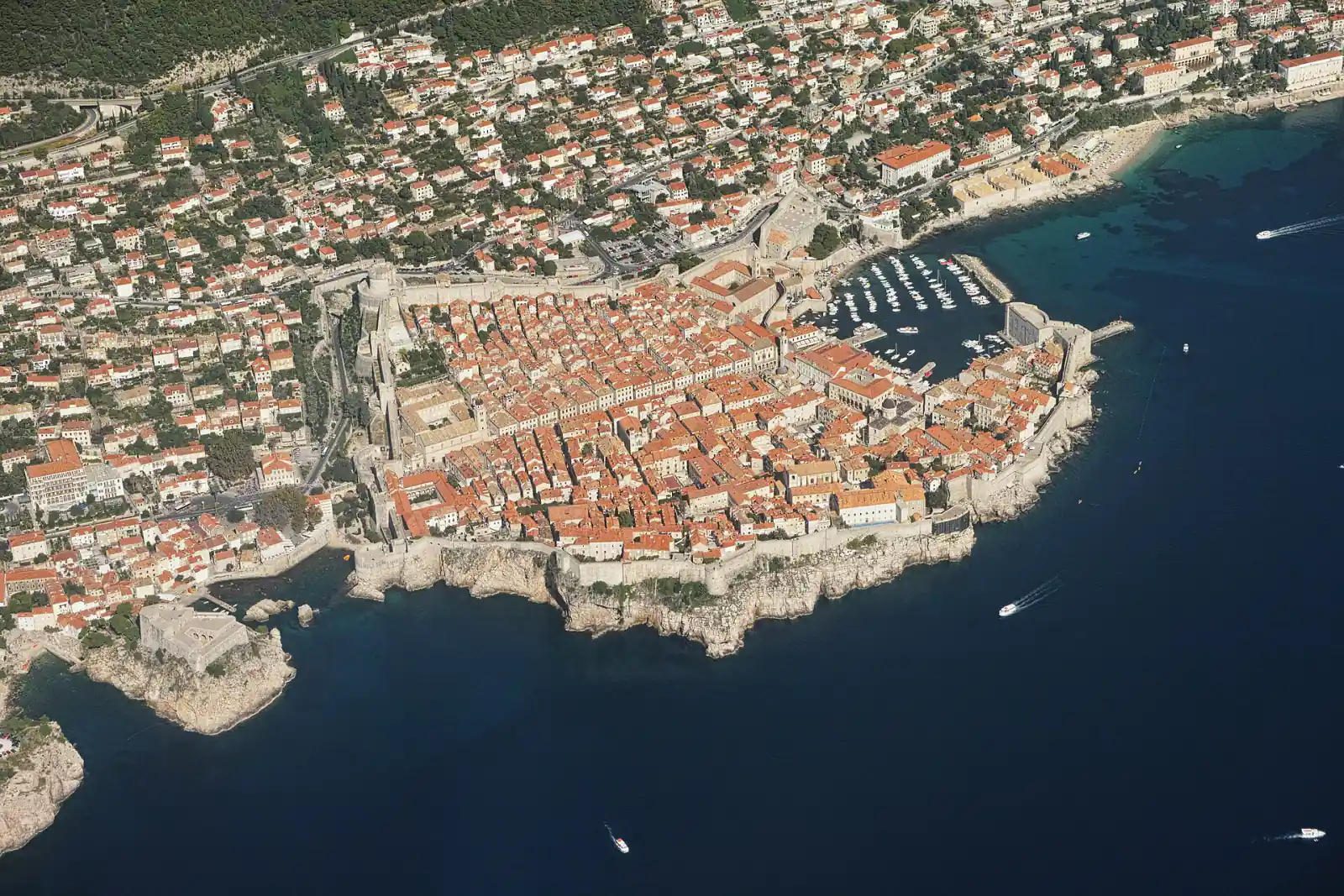
Dubrovnik
Adriatic seaport in southern Dalmatia with a UNESCO-listed walled Old Town and a Mediterranean climate.
Zadar
Croatia's oldest continuously inhabited city, on the Dalmatian coast with a Mediterranean climate.
Questions about retiring in Croatia
Answered from the verified data on this page. Every answer shows its source; anything we have not confirmed says so plainly rather than guessing.
- Does Croatia have a retirement visa?
No dedicated retirement visa. Retirement is handled through a general residence route: Temporary stay (temporary residence permit) for third-country nationals, granted for a purpose such as 'other purposes'; there is no dedicated retirement category.
mup.gov.hr- Do EU citizens need a visa to retire in Croatia?
No. Under EU freedom of movement, EU citizens may live and retire in Croatia. You can stay up to three months without registering, then register with the local authorities for longer stays.
europa.eu- How much monthly income do I need to retire in Croatia?
As a guide: The Ministry of the Interior lists the general conditions (funds to support oneself and health insurance) but publishes no fixed minimum monthly income for the ordinary 'other purposes' temporary stay, so the required means are modest relative to dedicated retirement visas elsewhere. Note the separate digital nomad permit is set at 2.5 times the average Croatian net salary (roughly EUR 3,600 per month in 2026) and does NOT allow pension-only retirees. Treat this as indicative and verify the current official figure before you rely on it.
mup.gov.hr- Is healthcare good for expats in Croatia?
Healthcare quality is rated good. Croatia has a universal, compulsory public health insurance system administered by the Croatian Health Insurance Fund (HZZO/CHIF): 'Health insurance in the Republic of Croatia is compulsory.' It covers primary and specialist care, hospitalisation, medications and cross-border care through a central directorate and 20 regional branches, with modest patient co-payments. On cost: Coverage requirements extend to aliens with approved permanent or long-term residence and non-EU nationals employed or in business in Croatia, so most non-EU residents must register with and contribute to HZZO; many also buy supplementary (dopunsko) or private insurance to cover co-payments and access private clinics. Proof of health insurance is a condition of any temporary stay.
hzzo.hr- How expensive is it to retire in Croatia?
Lower than the US. A comfortable single-retiree budget is Numbeo reports cost of living in the United States is 35.4% higher than in Croatia excluding rent, and 55.0% higher including rent, so Croatia sits clearly below US levels but is not among the cheapest destinations.
numbeo.com- Is Croatia safe?
Very safe. Croatia ranked 15th of the countries measured in the 2024 Global Peace Index with a score of 1.504, placing it among the most peaceful countries in the world and well ahead of the US and UK.
countryeconomy.com- What is the climate like in Croatia?
The climate is Mediterranean on the Adriatic coast, continental in the interior. The Adriatic coast and islands have a mediterranean climate (mostly Koppen Csb) with hot, dry summers and mild, wet winters, while the interior has a warmer continental climate; mean monthly temperatures range from about -3 C to 18 C in January, with more extreme swings inland.
en.wikipedia.org- Where do retirees live in Croatia?
Popular retirement spots include Split, Dubrovnik and Zadar.
en.wikipedia.org
Compare Croatia with its closest rivals
The three countries whose RetireScore sits nearest.