Ireland
A solid all-round choice. Ranked 29 of 55, strongest on safety, softest on retiree visa.
- Healthcare 78
- Retiree visa 50
- Affordability 55
- Safety 95
- Climate 80
- Expat community not verified70
1 of 6 axes rest on data we could not verify yet; those score a neutral 50 and are marked "not verified".
- Retirement visaYesStamp 0 (retirement / persons of independent means permission)lewissilkin.com
- Min incomeHigh (harder to meet)lewissilkin.com
- Monthly budget~$2,000-3,000/molovetovisitireland.com
- HealthcareGooden.wikipedia.org
- SafetyVery safeen.wikipedia.org
- Top citiesDublin, Galway, Cork
Good to know
- Good healthcare accessPublic system run by the HSE gives universal access to residents (free care with a means-tested medical card), but long waiting lists are a persistent issue and about 40% of people also carry private insurance.en.wikipedia.org
- Dedicated retirement visaStamp 0 (retirement / persons of independent means permission)lewissilkin.com
- Safe for retireesIreland ranked 5th most peaceful country in the world on the 2026 Global Peace Index (score 1.371).en.wikipedia.org
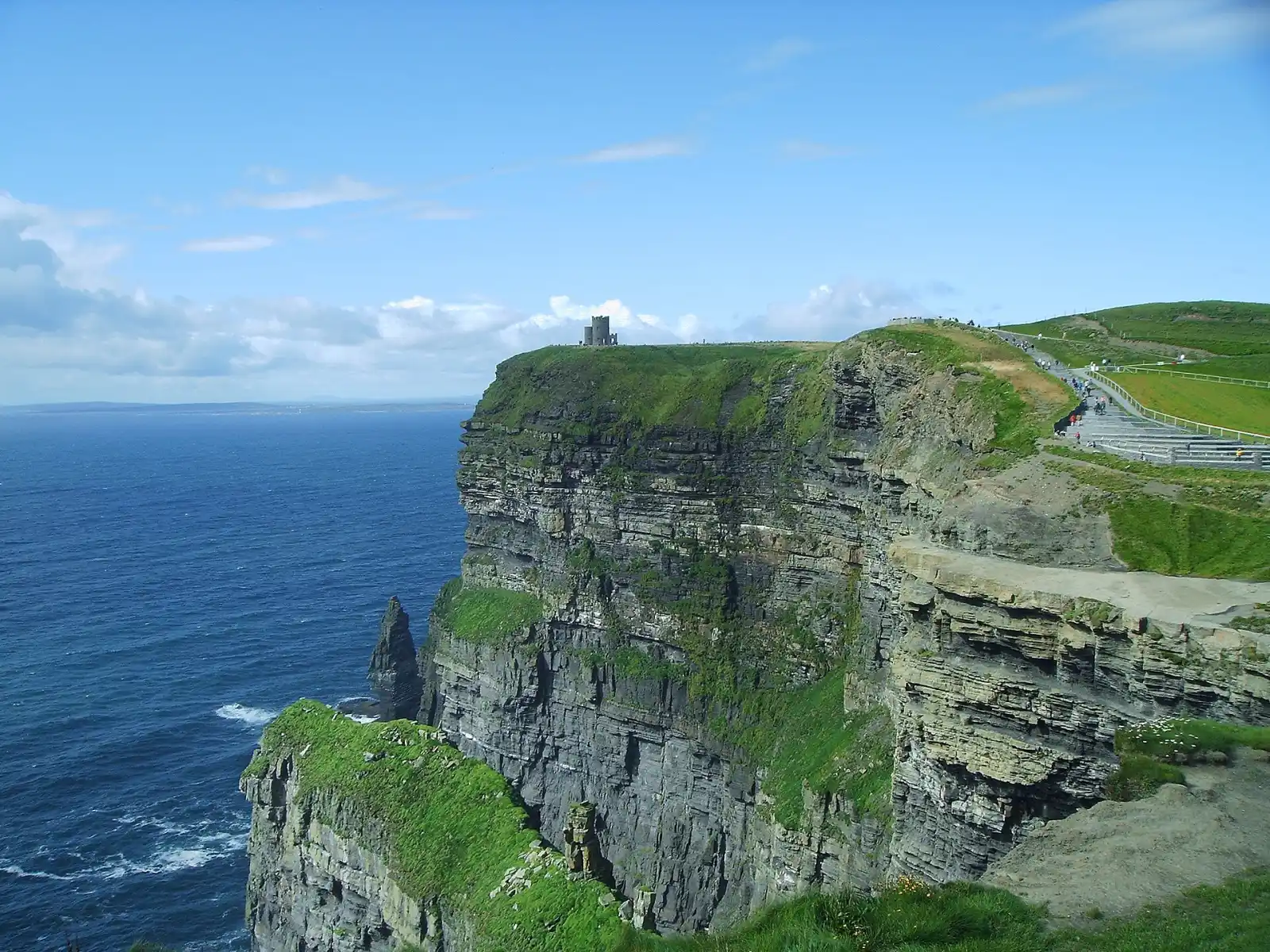
- Comfortable climateMild and damp year-round: winter lows around 4-7C, summer highs of 17-20C, with frequent rain (about 700mm on the east coast to 1,400mm on the west).en.wikipedia.org
Watch out for
- Expat community data not verified yet
Visa & residency
Requires verifiable income of at least EUR 50,000/year per person (EUR 100,000 for a couple), roughly EUR 4,200/month, plus access to a lump sum for emergencies or buying a home.
Restrictive: Stamp 0 does not permit work or business, gives no access to state benefits or public health services, must be renewed annually, requires private medical insurance, and does not readily lead to citizenship.
Healthcare
Public system run by the HSE gives universal access to residents (free care with a means-tested medical card), but long waiting lists are a persistent issue and about 40% of people also carry private insurance.
Retirees on Stamp 0 must hold private medical insurance with full cover for emergencies and hospital stays (e.g. VHI, Laya), since they cannot rely on publicly funded services.
Cost of living
A single retiree typically needs roughly EUR 2,000-3,000/month; Dublin is markedly higher and rural Ireland lower.
One-bedroom rents run about EUR 2,500-3,500/month in Dublin, EUR 1,800-2,600 in Cork, and EUR 1,200-1,900 in rural areas; outside Dublin housing is generally cheaper than major US cities.
Safety
Ireland ranked 5th most peaceful country in the world on the 2026 Global Peace Index (score 1.371).
Climate
Mild and damp year-round: winter lows around 4-7C, summer highs of 17-20C, with frequent rain (about 700mm on the east coast to 1,400mm on the west).
Community & language
No verified data yet
English is the everyday language and locals are known as friendly and hospitable, making it an easy landing spot for English-speaking retirees.
Irish (Gaeilge) and English are both official languages; English is the most widely spoken language of everyday life.
Taxes
Irish tax residents are generally taxable on worldwide income, but double-tax treaties provide relief so foreign pension income is not taxed twice.
Ireland has around 70 double-taxation treaties (including with the US); a person resident elsewhere for tax purposes may get relief or exemption from Irish tax under the relevant treaty.
Moving & migration
Opening a bank account in Ireland is straightforward for UK nationals. You typically need a valid passport (or other photo ID) and proof of Irish address (utility bill, tenancy agreement). Major banks include Allied Irish Banks (AIB), Bank of Ireland, and Permanent TSB. Under the Common Travel Area (CTA) arrangements, UK nationals have broad residency rights in Ireland, simplifying the account-opening process. Digital banks such as Revolut and N26 also operate in Ireland.
UK nationals resident in Ireland can access public healthcare. Register with a local GP (General Practitioner) and apply for a medical card or GP visit card depending on income, via the Health Service Executive (HSE). Read the GOV.UK guidance on healthcare in Ireland including information for UK State Pensioners and the S1 form. Under Common Travel Area arrangements, UK residents in Ireland have access to necessary healthcare.
If you are resident in Ireland, you cannot drive on a foreign licence. You must exchange your UK driving licence for an Irish licence through the National Driver Licence Service (NDLS). You will need a check code from the DVLA (for English, Welsh and Scottish licences) or the DVA (for Northern Irish licences). An international driving permit is not a substitute for exchanging your licence. Exchange is straightforward for UK licence holders and does not require a driving test.
Personal household goods can be moved from the UK to Ireland without customs duties under Common Travel Area arrangements. A detailed packing list is recommended for the moving company. For goods shipped from outside the UK/EU, standard Irish customs rules apply. Contact the Irish Revenue Commissioners for current customs guidance. Using a professional moving company is advisable.
Ireland follows EU pet travel rules. Dogs, cats and ferrets must be microchipped, vaccinated against rabies (at least 21 days before travel, pet at least 12 weeks old), and accompanied by an EU Pet Passport or an Animal Health Certificate. Dogs require tapeworm treatment (praziquantel) administered by a vet 24-120 hours before entry. No quarantine if requirements are met. Read guidance from the Irish Department of Agriculture, Food and the Marine.
Step 1: British nationals do not need a visa to live, work or study in Ireland under the Common Travel Area (CTA) arrangements. Step 2: Non-British family members may need to apply for permission to join you. Step 3: If you moved before 1 January 2021, you have rights under the Withdrawal Agreement. Step 4: After 5 years of legal continuous residence, apply for permanent residency. Step 5: After 5 years of residence you can apply for Irish citizenship (naturalisation). Ireland recognises dual citizenship with the UK.
Popular retirement spots
Where retirees in Ireland tend to settle, and the honest reason why. Each note shows its source.
Dublin
Ireland's capital and largest city (about 1.5m in the metro area), a Georgian-flavoured tech and finance hub, and the most expensive place to live in the country.
Galway
Lively arts and festival city on the west coast (European Capital of Culture 2020) with a relaxed, walkable feel and living costs about 30% below Dublin.
Cork
Ireland's second-largest city, set on the River Lee by one of the world's largest natural harbours, with a strong maritime, pharma and tech scene and lower rents than Dublin.
Questions about retiring in Ireland
Answered from the verified data on this page. Every answer shows its source; anything we have not confirmed says so plainly rather than guessing.
- Does Ireland have a retirement visa?
Yes. Ireland offers the Stamp 0 (retirement / persons of independent means permission).
lewissilkin.com- How much monthly income do I need to retire in Ireland?
As a guide: Requires verifiable income of at least EUR 50,000/year per person (EUR 100,000 for a couple), roughly EUR 4,200/month, plus access to a lump sum for emergencies or buying a home. Treat this as indicative and verify the current official figure before you rely on it.
lewissilkin.com- Is healthcare good for expats in Ireland?
Healthcare quality is rated good. Public system run by the HSE gives universal access to residents (free care with a means-tested medical card), but long waiting lists are a persistent issue and about 40% of people also carry private insurance. On cost: Retirees on Stamp 0 must hold private medical insurance with full cover for emergencies and hospital stays (e.g. VHI, Laya), since they cannot rely on publicly funded services.
en.wikipedia.org- How expensive is it to retire in Ireland?
Similar to the US. A comfortable single-retiree budget is A single retiree typically needs roughly EUR 2,000-3,000/month; Dublin is markedly higher and rural Ireland lower.
lovetovisitireland.com- Is Ireland safe?
Very safe. Ireland ranked 5th most peaceful country in the world on the 2026 Global Peace Index (score 1.371).
en.wikipedia.org- What is the climate like in Ireland?
The climate is Temperate oceanic (maritime), Koppen Cfb. Mild and damp year-round: winter lows around 4-7C, summer highs of 17-20C, with frequent rain (about 700mm on the east coast to 1,400mm on the west).
en.wikipedia.org- Where do retirees live in Ireland?
Popular retirement spots include Dublin, Galway and Cork.
en.wikipedia.org
Compare Ireland with its closest rivals
The three countries whose RetireScore sits nearest.