Taiwan
A solid all-round choice. Ranked 26 of 55, strongest on healthcare, softest on retiree visa.
- Healthcare 95
- Retiree visa 22
- Affordability 78
- Safety 95
- Climate 76
- Expat community not verified50
1 of 6 axes rest on data we could not verify yet; those score a neutral 50 and are marked "not verified".
- Retirement visaNoboca.gov.tw
- Min incomeNot verified yet
- Monthly budgetLower than the USnumbeo.com
- HealthcareExcellenten.wikipedia.org
- SafetyVery safenumbeo.com
- Top citiesTaipei, Taichung, Kaohsiung
Good to know
- Good healthcare accessTaiwan's single-payer National Health Insurance (NHI) reaches near-universal coverage (99.9% of the population as of 2023), with comprehensive benefits, free choice of hospitals and physicians, and low co-payments; it is internationally renowned for efficiency and patient satisfaction (~90%).en.wikipedia.org
- Low cost of livingA single person's estimated monthly costs are about NT$25,050 (~US$770) excluding rent, per Numbeo (Jun 2026).numbeo.com
- Safe for retireesTaiwan is not ranked in the Global Peace Index, but Numbeo (2026) gives it a very low Crime Index of ~17 and a high Safety Index of ~82.9, ranking it among the four safest countries worldwide.numbeo.com
- Comfortable climateThe East Asian monsoon dominates; summers (May-October) are hot and humid with most rainfall, and typhoons typically strike July-October (about four direct hits a year). The south is warmer and drier in winter than the cooler, wetter north.en.wikipedia.org
Watch out for
- No dedicated retirement visaboca.gov.tw
- Expat community data not verified yet
Visa & residency
No dedicated retirement visa exists; long-stay routes are visitor/resident visas, and the Employment Gold Card is available only to skilled professionals, not retirees.
No verified data yet
No verified data yet
Taiwan offers no passive-income retirement residency for ordinary foreign retirees. The Bureau of Consular Affairs lists visitor and resident visas but no retirement category. The Employment Gold Card (a combined work permit, residence permit and visa) exists for skilled professionals across ten designated fields, not as a retirement route.
Healthcare
Taiwan's single-payer National Health Insurance (NHI) reaches near-universal coverage (99.9% of the population as of 2023), with comprehensive benefits, free choice of hospitals and physicians, and low co-payments; it is internationally renowned for efficiency and patient satisfaction (~90%).
Foreign nationals holding a valid Alien Resident Certificate (ARC) must enrol in NHI after 6 months of continuous residence in Taiwan (one trip abroad of up to 30 days permitted); those employed with a work permit are enrolled by their employer from day one.
Cost of living
A single person's estimated monthly costs are about NT$25,050 (~US$770) excluding rent, per Numbeo (Jun 2026).
A 1-bedroom apartment in the city centre averages roughly NT$14,000-15,000 (~US$460-480) nationally, and noticeably higher in Taipei (around US$690), per Numbeo (Jun 2026).
Safety
Taiwan is not ranked in the Global Peace Index, but Numbeo (2026) gives it a very low Crime Index of ~17 and a high Safety Index of ~82.9, ranking it among the four safest countries worldwide.
Climate
Humid subtropical in the north, transitioning to tropical monsoon in central and southern Taiwan
The East Asian monsoon dominates; summers (May-October) are hot and humid with most rainfall, and typhoons typically strike July-October (about four direct hits a year). The south is warmer and drier in winter than the cooler, wetter north.
Community & language
No verified data yet
No verified data yet
English is taught as a foreign language and appears on transit signage, but is not widely spoken in daily life; Taiwan launched a '2030 Bilingual Nation' policy to promote it. Taiwan is not ranked in the EF English Proficiency Index, so no proficiency band is cited.
Mandarin Chinese is the de facto national language; Taiwanese Hokkien (~70% native speakers) and Hakka are also widely spoken. English is taught as a foreign language but not widely spoken in daily life.
Taxes
Residents are taxed on Taiwan-source income at progressive rates from 5% up to 40%. Foreign-source income (which can include overseas pensions) is generally outside the regular income tax and instead falls under the separate 20% Income Basic Tax only when foreign income is at least TWD 1 million and total basic income exceeds TWD 7.5 million, with foreign taxes creditable.
Taiwan has comprehensive income tax treaties with 30 territories, including the UK, Germany, France, the Netherlands, Japan, Australia, Canada and Singapore (notably not the United States).
Moving & migration
Foreigners with an Alien Resident Certificate (ARC) can open bank accounts at Taiwanese banks such as CTBC Bank, Bank of Taiwan, and Cathay United Bank. Most ATMs at 7-Eleven convenience stores accept international cards. International bank transfers can be slow; plan accordingly. Passport and ARC required to open an account.
Foreign nationals holding an ARC must enrol in National Health Insurance (NHI) after 6 months of continuous residence. Those employed with a work permit are enrolled from day one. Register at the local NHI office with ARC and complete enrolment forms.
No verified data yet
Strict customs rules administered by the Customs Administration. Travellers must declare items subject to tax or duty. Cash or traveller's cheques above NTD 100,000 or USD 10,000 must be declared on arrival. Household goods shipped separately may be subject to import duty.
No verified data yet
No dedicated retirement visa for ordinary foreign retirees. Long-term paths: 1) Alien Permanent Resident Certificate (APRC) requires 5 years continuous residence on an ARC (work, investment, or family route). 2) Employment Gold Card available only to skilled professionals. 3) Visitor visa extensions up to 180 days total. 4) No passive-income retirement route exists.
Popular retirement spots
Where retirees in Taiwan tend to settle, and the honest reason why. Each note shows its source.
Taipei
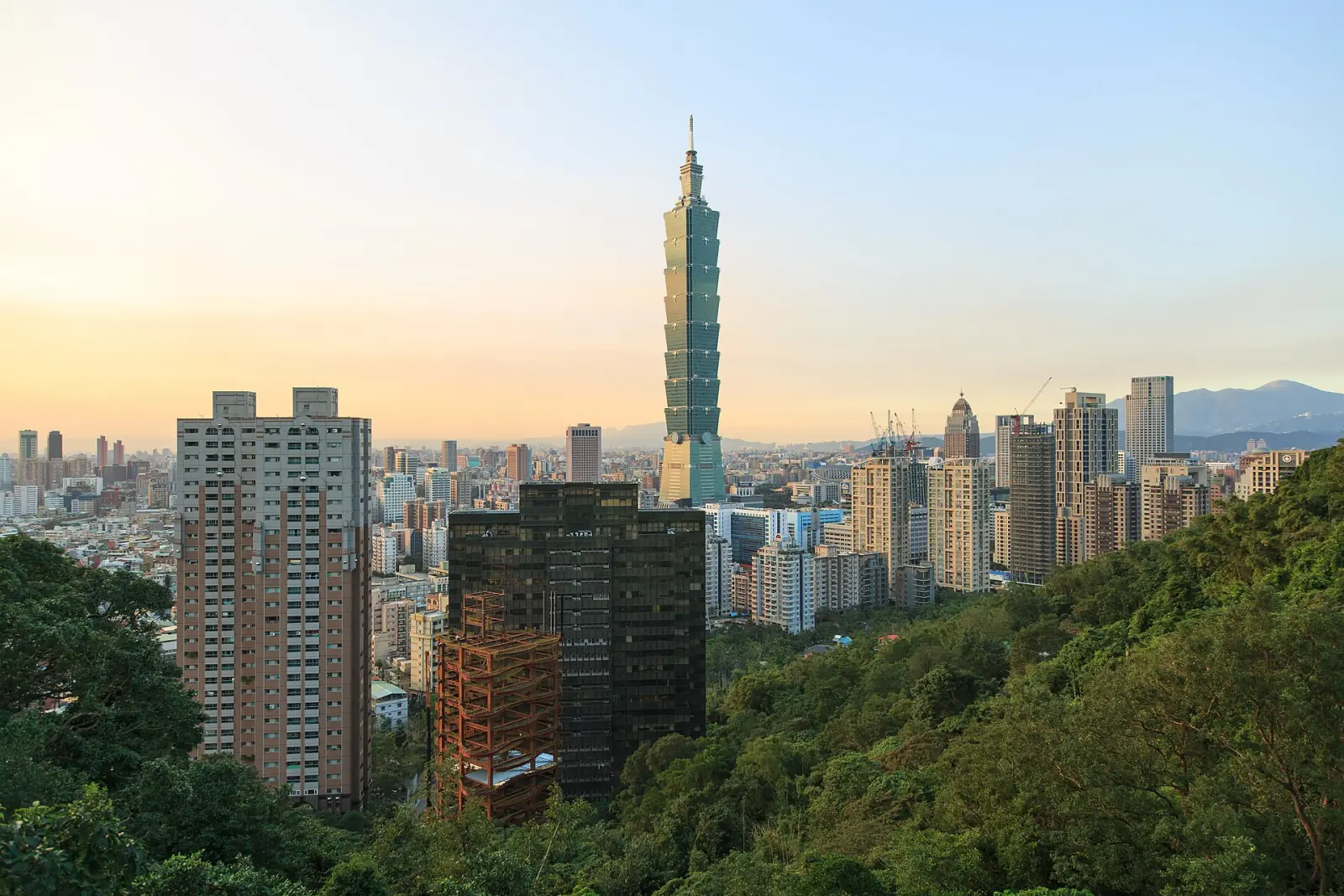
Taiwan's capital and special municipality (city proper ~2.49 million; metro ~7 million), the country's economic, political and cultural centre with the best infrastructure and the highest rents.
Taichung
Taiwan's second-largest city (~2.86 million) in the central region, known for a warm, mild subtropical climate and a more relaxed pace than Taipei.
Kaohsiung
Taiwan's third-largest city (~2.72 million) in the south, home to the country's largest harbour, with a warm tropical climate and generally lower living costs.
Tainan
Taiwan's oldest city and former capital (founded 1624), a southern cultural hub with roughly 1,600 temples, warm weather and a slower, heritage-rich lifestyle.
Questions about retiring in Taiwan
Answered from the verified data on this page. Every answer shows its source; anything we have not confirmed says so plainly rather than guessing.
- Does Taiwan have a retirement visa?
No dedicated retirement visa. Retirement is handled through a general residence route: No dedicated retirement visa exists; long-stay routes are visitor/resident visas, and the Employment Gold Card is available only to skilled professionals, not retirees..
goldcard.nat.gov.tw- How much monthly income do I need to retire in Taiwan?
This is not verified yet - check the official source before you rely on it.
- Is healthcare good for expats in Taiwan?
Healthcare quality is rated excellent. Taiwan's single-payer National Health Insurance (NHI) reaches near-universal coverage (99.9% of the population as of 2023), with comprehensive benefits, free choice of hospitals and physicians, and low co-payments; it is internationally renowned for efficiency and patient satisfaction (~90%). On cost: Foreign nationals holding a valid Alien Resident Certificate (ARC) must enrol in NHI after 6 months of continuous residence in Taiwan (one trip abroad of up to 30 days permitted); those employed with a work permit are enrolled by their employer from day one.
en.wikipedia.org- How expensive is it to retire in Taiwan?
Lower than the US. A comfortable single-retiree budget is A single person's estimated monthly costs are about NT$25,050 (~US$770) excluding rent, per Numbeo (Jun 2026).
numbeo.com- Is Taiwan safe?
Very safe. Taiwan is not ranked in the Global Peace Index, but Numbeo (2026) gives it a very low Crime Index of ~17 and a high Safety Index of ~82.9, ranking it among the four safest countries worldwide.
numbeo.com- What is the climate like in Taiwan?
The climate is Humid subtropical in the north, transitioning to tropical monsoon in central and southern Taiwan. The East Asian monsoon dominates; summers (May-October) are hot and humid with most rainfall, and typhoons typically strike July-October (about four direct hits a year). The south is warmer and drier in winter than the cooler, wetter north.
en.wikipedia.org- Where do retirees live in Taiwan?
Popular retirement spots include Taipei, Taichung, Kaohsiung and Tainan.
en.wikipedia.org
Compare Taiwan with its closest rivals
The three countries whose RetireScore sits nearest.