
Estonia
A solid all-round choice. Ranked 33 of 55, strongest on safety, softest on retiree visa.
- Healthcare 78
- Retiree visa 22
- Affordability 78
- Safety 95
- Climate 80
- Expat community 65
- Retirement visaNopolitsei.ee
- Min incomeLow (easier to meet)politsei.ee
- Monthly budget~$1,400-2,000/monumbeo.com
- HealthcareGooden.wikipedia.org
- SafetyVery safeen.wikipedia.org
- Top citiesTallinn, Tartu
Good to know
- Good healthcare accessUniversal, solidarity-funded system administered by the Estonian Health Insurance Fund (EHIF), the sole purchaser of care, covering about 95% of residents. Estonia is a world leader in e-health (first nationwide electronic health records; about 97% of prescriptions digital).en.wikipedia.org
- Low cost of livingIn Tallinn, estimated monthly costs for a single person are about EUR 900 (about $1,030) excluding rent; a comfortable single-person budget including rent is roughly EUR 1,400-2,000/month, less in smaller cities.numbeo.com
- Safe for retireesEstonia ranks 25th of 163 in the 2026 Global Peace Index (score 1.623), among the more peaceful and safe countries globally.en.wikipedia.org
- Comfortable climateFour seasons of near-equal length: cold, snowy winters (February averages roughly -2C to -5C) and mild summers (July around 18C). Autumns are wet and windy; winters bring short, dark days.en.wikipedia.org
Watch out for
- No dedicated retirement visapolitsei.ee
Visa & residency
No retirement-specific visa; non-EU retirees use a temporary residence permit (later convertible to permanent residence) or a long-stay (D) visa.
A temporary residence permit requires proof of sufficient income equal to the official subsistence level (set annually by the State Budget Act) plus a valid health insurance contract - a low threshold. Note: Estonia's well-known Digital Nomad Visa requires a much higher EUR 4,500 net/month, but it is for remote workers, not retirees.
Estonia is an EU/Schengen state with no dedicated retiree visa. Non-EU retirees typically enter via a temporary residence permit, which after 3 of 5 years' residence (plus A2 Estonian and integration) can become permanent residence. The much-publicised Digital Nomad Visa is explicitly for location-independent remote workers with active foreign income, not a retirement route.
Healthcare
Universal, solidarity-funded system administered by the Estonian Health Insurance Fund (EHIF), the sole purchaser of care, covering about 95% of residents. Estonia is a world leader in e-health (first nationwide electronic health records; about 97% of prescriptions digital).
EHIF cover requires being a permanent resident or a legal resident who pays social tax; retirees not paying social tax must hold private health insurance, and a valid health insurance contract is a mandatory condition of the residence permit application.
Cost of living
In Tallinn, estimated monthly costs for a single person are about EUR 900 (about $1,030) excluding rent; a comfortable single-person budget including rent is roughly EUR 1,400-2,000/month, less in smaller cities.
Tallinn has Estonia's highest rents; Tartu runs about 20% cheaper, with one-bedroom apartments from around EUR 450/month.
Safety
Estonia ranks 25th of 163 in the 2026 Global Peace Index (score 1.623), among the more peaceful and safe countries globally.
Climate
Humid continental (Koppen Dfb) - a temperate continental climate with maritime influence on the coast.
Four seasons of near-equal length: cold, snowy winters (February averages roughly -2C to -5C) and mild summers (July around 18C). Autumns are wet and windy; winters bring short, dark days.
Community & language
Estonia's foreign-born population is sizeable (about 15%) but predominantly of post-Soviet/Russian origin; the Western retiree expat scene is small and concentrated in Tallinn. English is widely spoken, giving Estonia High English proficiency (EF EPI rank 31).
Estonian is the official language, but English proficiency is high (EF EPI 2025: rank 31, score 561, High band), so English is widely spoken, especially in Tallinn and Tartu and among younger people.
Taxes
Estonian tax residents are liable to tax on worldwide income regardless of source, including foreign pensions, at a flat rate (22% from 2026). Double-tax treaties and the foreign tax credit mitigate double taxation on pensions already taxed abroad.
Estonia has an extensive double-tax-treaty network (63 income-tax treaties); residents may credit foreign income tax against Estonian tax (credit capped at 22% of the foreign income, computed per country), preventing double taxation.
Moving & migration
Estonia is a highly digital EU country. Non-residents and residents can open bank accounts (Swedbank, SEB, LHV, Luminor). You typically need your passport, residence permit or right of residence, and Estonian personal identification code (isikukood). Many banks offer fully digital onboarding and English-language services. An e-Residency card alone does not grant banking access but helps with digital identification.
You must register with the Estonian Health Insurance Fund (Tervisekassa) as a resident. Permanent residents and persons with a residence permit or right of residence are entitled to health insurance if they work and social tax is paid, or if they are equivalent to insured persons (e.g. registered unemployed, pensioners, dependants). Alternatively, you can take out a voluntary insurance contract with Tervisekassa. EU citizens can use an EHIC temporarily. Private insurance bridges gaps until public cover starts.
You can drive in Estonia on a foreign driving licence for up to 12 months from the start of your residency. EU/EEA licences are exchanged without a test. UK and other Vienna/Geneva Convention licences are generally exchanged without exams for categories A and B. Apply at an Estonian Transport Administration service bureau with your ID, health certificate, foreign licence, and state fee. If the licence expired more than 5 years ago or you cannot prove residency at the time of issue, you must take theory and practical driving tests.
As an EU member state, Estonia applies EU customs rules. Personal property and used household goods may qualify for relief from import duties when moving your normal residence to Estonia, provided the goods have been owned and used for at least 6 months in your previous country. Contact the Estonian Tax and Customs Board (EMTA) for the latest declaration forms and relief conditions.
Dogs, cats, and ferrets entering Estonia from another EU country need a microchip (ISO 11784/11785), an EU pet passport, and a valid rabies vaccination (given at least 21 days before travel, animal at least 12 weeks old). Anti-parasite treatment is not required for Estonia. From non-EU countries: a veterinary certificate (valid 10 days), declaration of non-commercial movement, microchip, and rabies vaccination. From unlisted (high-rabies) countries a rabies antibody titre test is also required. Entry is allowed via all border stations.
1. Non-EU retirees apply for a temporary residence permit for settling permanently at an Estonian embassy or the Police and Border Guard Board (PPA). Show sufficient legal income (at least the subsistence level), valid health insurance, and accommodation. 2. The permit is issued for up to 5 years and renewable. 3. Register your address in the Population Register. 4. After 3 years on a temporary residence permit (non-student), you may apply for a long-term resident's residence permit (permanent). Half the time on a student permit counts. 5. Apply for permanent residence at the PPA; must pass an Estonian language exam at A2 level and an integration exam.
Popular retirement spots
Where retirees in Estonia tend to settle, and the honest reason why. Each note shows its source.
Tallinn
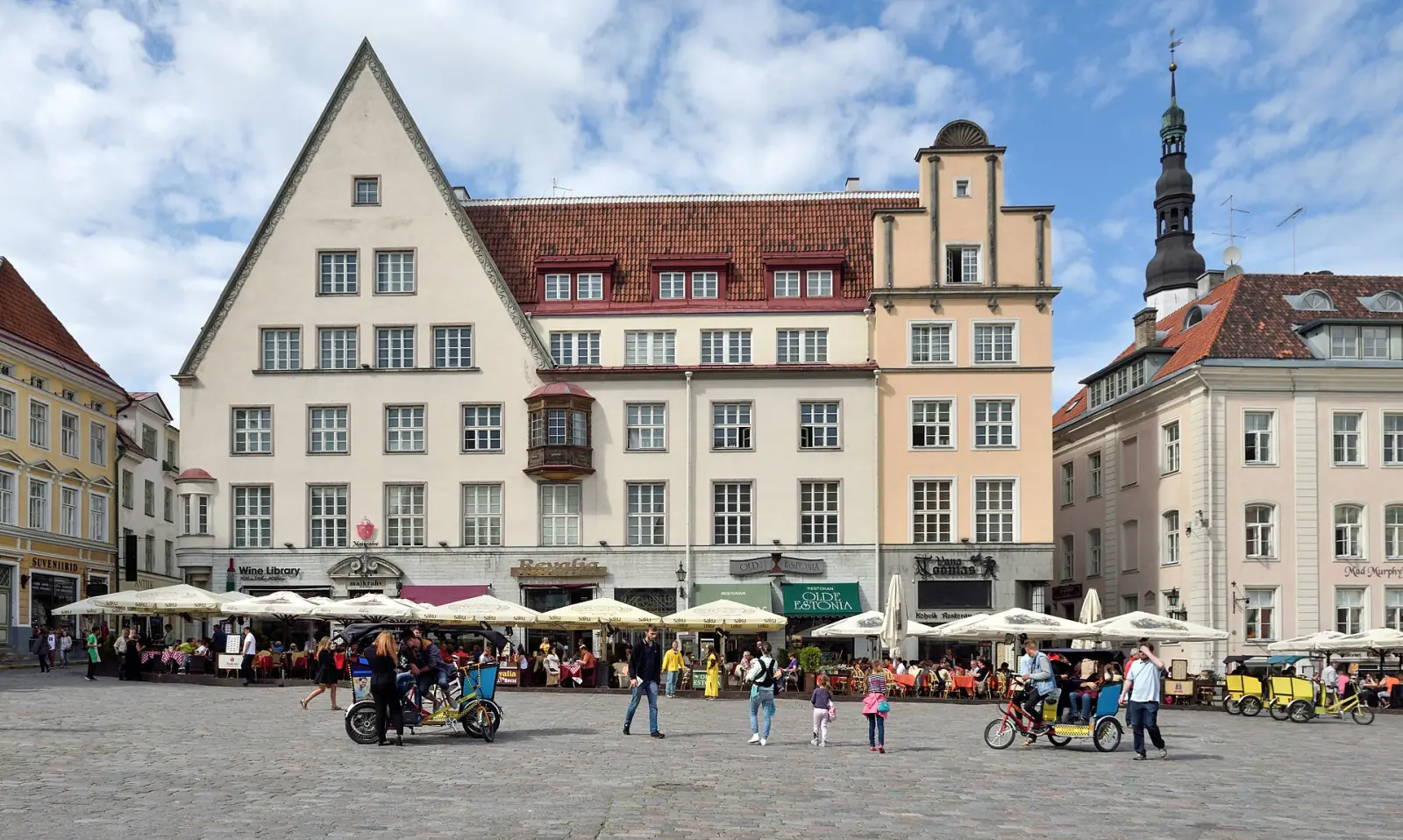
The capital and largest city, home to nearly half of Estonia's recent immigrants and its most international, English-friendly and digitally advanced scene - alongside the country's highest living costs and a UNESCO-listed medieval Old Town.
Tartu
Estonia's second city and intellectual heart, built around the historic University of Tartu; European Capital of Culture 2024, culturally vibrant and about 20% cheaper than Tallinn.
Questions about retiring in Estonia
Answered from the verified data on this page. Every answer shows its source; anything we have not confirmed says so plainly rather than guessing.
- Does Estonia have a retirement visa?
No dedicated retirement visa. Retirement is handled through a general residence route: No retirement-specific visa; non-EU retirees use a temporary residence permit (later convertible to permanent residence) or a long-stay (D) visa..
politsei.ee- How much monthly income do I need to retire in Estonia?
As a guide: A temporary residence permit requires proof of sufficient income equal to the official subsistence level (set annually by the State Budget Act) plus a valid health insurance contract - a low threshold. Note: Estonia's well-known Digital Nomad Visa requires a much higher EUR 4,500 net/month, but it is for remote workers, not retirees. Treat this as indicative and verify the current official figure before you rely on it.
politsei.ee- Is healthcare good for expats in Estonia?
Healthcare quality is rated good. Universal, solidarity-funded system administered by the Estonian Health Insurance Fund (EHIF), the sole purchaser of care, covering about 95% of residents. Estonia is a world leader in e-health (first nationwide electronic health records; about 97% of prescriptions digital). On cost: EHIF cover requires being a permanent resident or a legal resident who pays social tax; retirees not paying social tax must hold private health insurance, and a valid health insurance contract is a mandatory condition of the residence permit application.
en.wikipedia.org- How expensive is it to retire in Estonia?
Lower than the US. A comfortable single-retiree budget is In Tallinn, estimated monthly costs for a single person are about EUR 900 (about $1,030) excluding rent; a comfortable single-person budget including rent is roughly EUR 1,400-2,000/month, less in smaller cities.
numbeo.com- Is Estonia safe?
Very safe. Estonia ranks 25th of 163 in the 2026 Global Peace Index (score 1.623), among the more peaceful and safe countries globally.
en.wikipedia.org- What is the climate like in Estonia?
The climate is Humid continental (Koppen Dfb) - a temperate continental climate with maritime influence on the coast.. Four seasons of near-equal length: cold, snowy winters (February averages roughly -2C to -5C) and mild summers (July around 18C). Autumns are wet and windy; winters bring short, dark days.
en.wikipedia.org- Where do retirees live in Estonia?
Popular retirement spots include Tallinn and Tartu.
en.wikipedia.org
Compare Estonia with its closest rivals
The three countries whose RetireScore sits nearest.