Cambodia
A solid all-round choice. Ranked 38 of 55, strongest on affordability, softest on healthcare.
- Healthcare 32
- Retiree visa 92
- Affordability 95
- Safety 52
- Climate 66
- Expat community 53
- Retirement visaYesRetirement Extension of Stay (ER) on an E-class (ordinary/business) visainternationalliving.com
- Min incomeLow (easier to meet)internationalliving.com
- Monthly budget~$900-1,300/monumbeo.com
- HealthcareBasicexpatfinancial.com
- SafetyModerateen.wikipedia.org
- Top citiesPhnom Penh, Siem Reap, Kampot
Good to know
- Dedicated retirement visaRetirement Extension of Stay (ER) on an E-class (ordinary/business) visainternationalliving.com
- Low cost of livingEstimated monthly costs for a single person are about $575 (€502) excluding rent, so a single retiree budget is roughly $900-$1,300/month including modest rent.numbeo.com
Watch out for
- Limited healthcareHealthcare is uneven and below Western standards, with much better care in urban centres like Phnom Penh and Siem Reap (private hospitals with English-speaking staff) than in rural provinces, where high-level care is scarce. Serious conditions typically require medical evacuation to Thailand or Singapore.expatfinancial.com
- Safety needs attentionCambodia ranks 96th with a score of 2.075 on the Global Peace Index, placing it in the mid-range globally. Petty theft, scams and road-traffic risks are the main day-to-day concerns for foreign residents.en.wikipedia.org
- Few expats, less EnglishEstablished expat pockets exist in Phnom Penh and Siem Reap where English is commonly used, but Cambodia ranks last (123rd) on the 2025 EF English Proficiency Index with a score of 390, in the 'very low proficiency' band, so English is not widely spoken outside tourist and expat areas.en.wikipedia.org
Visa & residency
Retirement Extension of Stay (ER) on an E-class (ordinary/business) visa
No fixed monthly income minimum is codified. Applicants must show they are retired and no longer working, and provide evidence of sufficient financial resources (pension payments, savings or other retirement income) to support themselves.
There is no standalone retirement entry visa; retirees 55+ enter on an E-class (ordinary) visa and then apply in-country for the ER 'Retirement' extension of stay. It is valid for up to 12 months, renewable indefinitely, and typically costs around $290-$300 for a one-year extension. Proof of health insurance is not always required but is sometimes requested.
Healthcare
Healthcare is uneven and below Western standards, with much better care in urban centres like Phnom Penh and Siem Reap (private hospitals with English-speaking staff) than in rural provinces, where high-level care is scarce. Serious conditions typically require medical evacuation to Thailand or Singapore.
No local insurance is mandated, but comprehensive private international health insurance that includes medical-evacuation cover is strongly recommended for expats, since serious cases must be evacuated to Thailand or Singapore. A specific premium figure for a 65-year-old could not be verified at a reliable source.
Cost of living
Estimated monthly costs for a single person are about $575 (€502) excluding rent, so a single retiree budget is roughly $900-$1,300/month including modest rent.
A 1-bedroom apartment in the city centre averages about $395/month (range roughly $250-$1,010).
Safety
Cambodia ranks 96th with a score of 2.075 on the Global Peace Index, placing it in the mid-range globally. Petty theft, scams and road-traffic risks are the main day-to-day concerns for foreign residents.
Climate
Hot year-round with temperatures generally 21-35°C (up to ~40°C in April). A rainy/monsoon season runs May-October (heaviest September-October) and a drier season November-April (driest January-February).
Community & language
Established expat pockets exist in Phnom Penh and Siem Reap where English is commonly used, but Cambodia ranks last (123rd) on the 2025 EF English Proficiency Index with a score of 390, in the 'very low proficiency' band, so English is not widely spoken outside tourist and expat areas.
Khmer is the official and most widely spoken language. English is used in tourism, business and expat hubs, but national English proficiency is very low.
Taxes
Cambodia levies a monthly Tax on Salary on employment income (0-20%) rather than a general personal income tax; foreign pension income is not employment salary and is generally not taxed. Residency is triggered by domicile, principal abode, or presence over 182 days in a 12-month period.
Cambodia's double-tax treaties are with Asian partners (e.g. China, Singapore, Thailand, South Korea, Vietnam, Brunei). It has no double-tax treaty with the US, UK, Netherlands, Canada or Australia.
Cambodian riel (KHR, ៛); the US dollar circulates widely and is used de facto alongside the riel.
Moving & migration
Opening a bank account in Cambodia as a foreigner is relatively straightforward. You typically need a valid passport, a long-term visa (E-class/ER extension), and proof of address. Major banks include ABA Bank, Canadia Bank, and ACLEDA Bank. US dollar accounts are standard as the US dollar circulates widely alongside the Cambodian riel. Some banks may ask for a minimum deposit.
Cambodia has no reciprocal health agreement with the UK. You are strongly advised to take out comprehensive health insurance, including medical evacuation cover. Private hospitals in Phnom Penh and Siem Reap have English-speaking staff, but public facilities often have little or no English. Serious medical conditions typically require evacuation to Thailand or Singapore. Insurance companies in Cambodia include Forte Insurance and Cambodian National Insurance Company.
To drive in Cambodia, you can apply for a Cambodian driving licence through the General Department of Public Works and Transport. You may also use a valid UK driving licence with an International Driving Permit (IDP) for a limited period. If asked for a letter authenticating your UK licence, contact the DVLA.
Personal household goods can be shipped to Cambodia. Customs duties and taxes may apply depending on the items and your residency status. A detailed packing list, passport, and valid visa are typically required. It is advisable to use a reputable international moving company familiar with Cambodian customs procedures, as regulations can change.
Dogs and cats entering Cambodia require a veterinary health certificate, proof of rabies vaccination, and an import permit from the Cambodian Ministry of Agriculture, Forestry and Fisheries. Pets may be subject to quarantine inspection upon arrival. For UK pets, use the non-EU pet travel route with an Export Health Certificate (EHC) from an official vet. Contact the Cambodian Embassy in London for current requirements before travel.
Step 1: Enter Cambodia on an E-class (ordinary/business) visa (valid 30 days). Step 2: Apply in-country for the ER (Retirement) Extension of Stay, valid for up to 12 months and renewable indefinitely (age 55+). Step 3: Annual renewal of the ER extension. Step 4: Cambodian permanent residency can be granted on a case-by-case basis at the discretion of the King and depends on factors including language ability. There is no guaranteed path to permanent residency for most retirees.
Popular retirement spots
Where retirees in Cambodia tend to settle, and the honest reason why. Each note shows its source.
Phnom Penh
The capital and largest city, offering the country's best amenities, international schools and hospitals, French-colonial riverside charm, and affordability relative to other Southeast Asian capitals.
Siem Reap
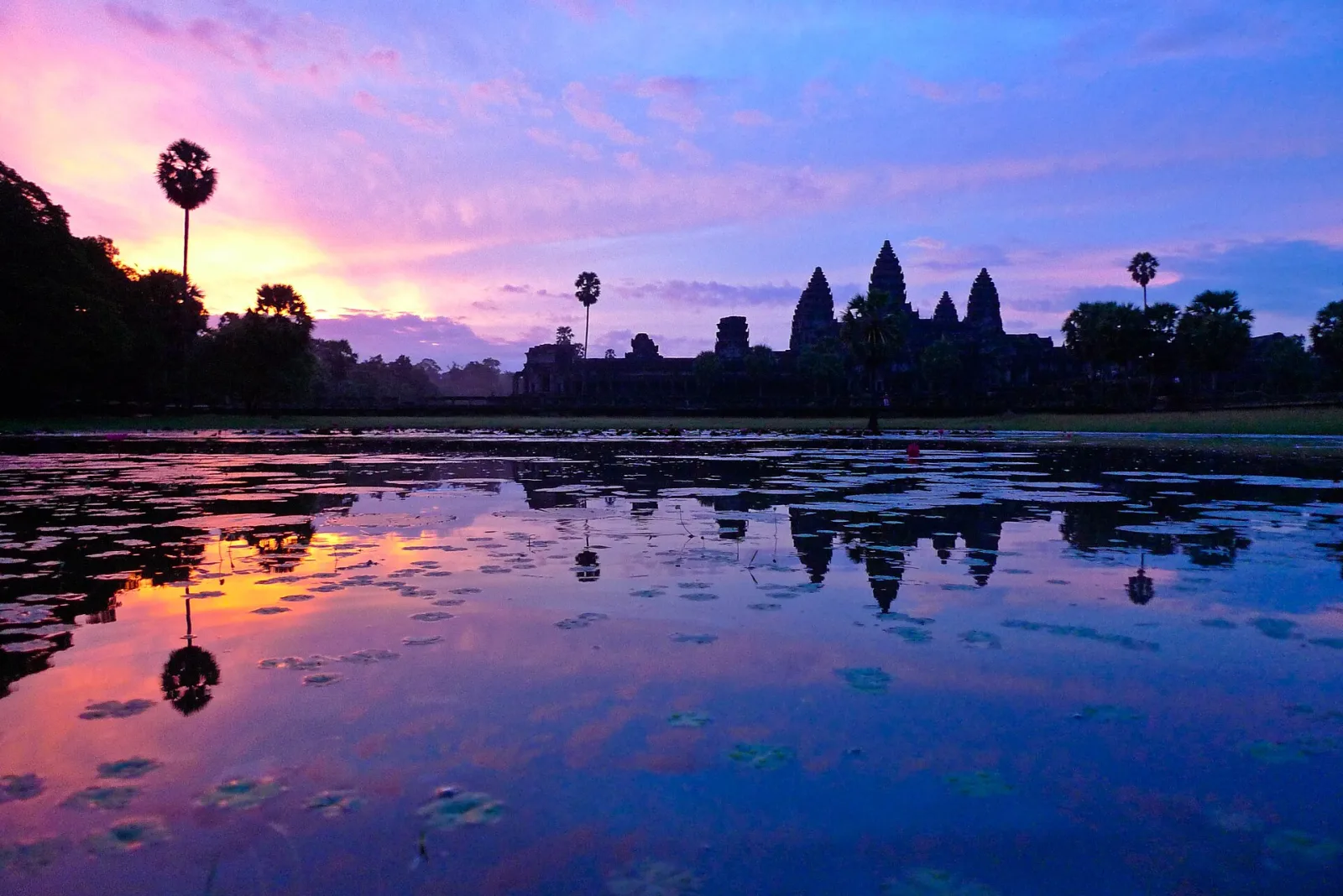
Cambodia's main tourism hub and gateway to the Angkor temples, with a well-developed visitor infrastructure and expat scene at a relaxed, small-city pace.
Kampot
A laid-back riverside town with 19th-century French colonial architecture about 5 km from the coast, drawing European and other expat retirees who want a quieter alternative to the big cities.
Questions about retiring in Cambodia
Answered from the verified data on this page. Every answer shows its source; anything we have not confirmed says so plainly rather than guessing.
- Does Cambodia have a retirement visa?
Yes. Cambodia offers the Retirement Extension of Stay (ER) on an E-class (ordinary/business) visa.
internationalliving.com- How much monthly income do I need to retire in Cambodia?
As a guide: No fixed monthly income minimum is codified. Applicants must show they are retired and no longer working, and provide evidence of sufficient financial resources (pension payments, savings or other retirement income) to support themselves. Treat this as indicative and verify the current official figure before you rely on it.
internationalliving.com- Is healthcare good for expats in Cambodia?
Healthcare quality is rated basic. Healthcare is uneven and below Western standards, with much better care in urban centres like Phnom Penh and Siem Reap (private hospitals with English-speaking staff) than in rural provinces, where high-level care is scarce. Serious conditions typically require medical evacuation to Thailand or Singapore. On cost: No local insurance is mandated, but comprehensive private international health insurance that includes medical-evacuation cover is strongly recommended for expats, since serious cases must be evacuated to Thailand or Singapore. A specific premium figure for a 65-year-old could not be verified at a reliable source.
expatfinancial.com- How expensive is it to retire in Cambodia?
Much lower than the US. A comfortable single-retiree budget is Estimated monthly costs for a single person are about $575 (€502) excluding rent, so a single retiree budget is roughly $900-$1,300/month including modest rent.
numbeo.com- Is Cambodia safe?
Moderate. Cambodia ranks 96th with a score of 2.075 on the Global Peace Index, placing it in the mid-range globally. Petty theft, scams and road-traffic risks are the main day-to-day concerns for foreign residents.
en.wikipedia.org- What is the climate like in Cambodia?
The climate is tropical monsoon. Hot year-round with temperatures generally 21-35°C (up to ~40°C in April). A rainy/monsoon season runs May-October (heaviest September-October) and a drier season November-April (driest January-February).
en.wikipedia.org- Where do retirees live in Cambodia?
Popular retirement spots include Phnom Penh, Siem Reap and Kampot.
en.wikipedia.org
Compare Cambodia with its closest rivals
The three countries whose RetireScore sits nearest.